Health hazard · Aspiration hazard
H304 — May be fatal if swallowed and enters airways
Health hazard statements describe what the substance does to a person exposed to it. 201 substances with a harmonised EU classification carry this code.
01 · Wording
What H304 says
May be fatal if swallowed and enters airways.
CLP Annex III · Health hazards
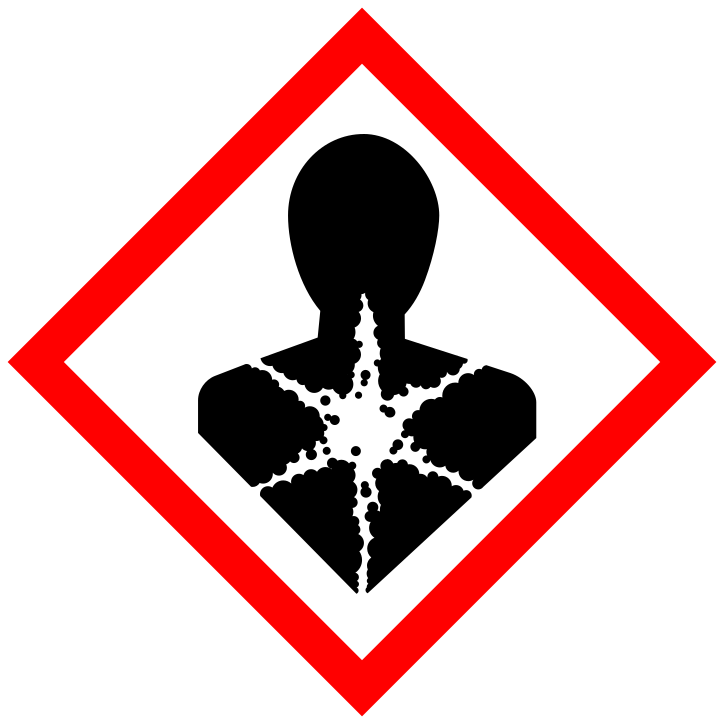
Aspiration hazard GHS chapter 3.10
Category 1 · pictogram GHS08 (health hazard) · signal word Danger
Unchanged since 2009.
Present in every UN GHS edition from Rev.3 (2009) to Rev.11 (2025), with the same wording throughout.
Nine editions of the UN model text, 86 hazard statements, 19 of which ever moved. Read the full story in what changed in UN GHS Rev.11.
02 · Legal status
Where H304 is current
GHS is a United Nations model text, revised every two years, and each jurisdiction adopts a revision on its own timetable. A code can be legally current in one system and deleted in another — that is normal, not an error.
| Jurisdiction | Basis | Status of H304 |
|---|---|---|
| EU CLP | Regulation (EC) 1272/2008 CLP Annex IV, Part 2 (consolidated) | Current |
| US OSHA HazCom | 29 CFR 1910.1200 Appendix C UN GHS Rev.7 (final rule of 20 May 2024) | Current |
| US HazCom 2012 | legacy · GHS Rev.3 UN GHS Rev.3, Annex 3 | Current |
| UN GHS | Rev.11 (2025) UN GHS Rev.11, Annex 3 | Current |
Currently in force under: EU CLP, US OSHA HazCom, US HazCom 2012, UN GHS. Sources: EU CLP · US OSHA HazCom · US HazCom 2012 · UN GHS
03 · Substances
Substances carrying H304
Every entry whose harmonised CLP Annex VI classification includes this hazard statement. Substances with a reference page here open on this site; the rest open on ghssymbols.com.
- (3E)-dec-3-en-2-one CAS 18402-84-1
- (R)-p-mentha-1,8-diene;d-limonene CAS 5989-27-5
- (Z)-octadec-9-enylamine CAS 112-90-3
- 1-isopropyl-4-methylbenzene; p-cymene CAS 99-87-6
- 1,3-dichloropropene [1]; (Z)-1,3-dichloropropene [2] CAS 542-75-6[1]10061-01-
- 1,4-dimethylcyclohexane CAS 589-90-2
- 1,4-dimethylnaphthalene CAS 571-58-4
- 2,4,4-trimethylpentene CAS 25167-70-8
- 5-endo-hexyl-bicyclo[2.2.1]hept-2-ene CAS 22094-83-3
- amines, coco alkyl CAS 61788-46-3
- amines, hydrogenated tallow alkyl CAS 61788-45-2
- amines, tallow alkyl CAS 61790-33-8
- Aromatic hydrocarbons, C6-10, acid-treated, neutralized; Low boiling point naphtha - unspecified CAS 68131-49-7
- Aromatic hydrocarbons, C6-8, naphtha-raffinate pyrolyzate-derived; Low boiling point thermally cracked naphtha; [A complex combination of hydrocarbons obtained by the fractionation pyrolysis at 816°C (1500°F) of naphtha and raffinate. It consists predominantly of aromatic hydrocarbons having carbon numbers predominantly in the range of C6 through C8, including benzene.] CAS 68475-70-7
- Aromatic hydrocarbons, C7-12, C8-rich; Low boiling point cat-reformed naphtha; [A complex combination of hydrocarbons obtained by separation from the platformate-containing fraction. It consists predominantly of aromatic hydrocarbons having carbon numbers predominantly in the range of C7 through C12 (primarily C8) and can contain nonaromatic hydrocarbons, both boiling in the range of approximately 130°C to 200°C (266°F to 392°F).] CAS 93571-75-6
- Aromatic hydrocarbons, C7-8, dealkylation products, distn. residues; Low boiling point naphtha - unspecified CAS 90989-42-7
- Aromatic hydrocarbons, C8-10; Low boiling point naphtha - unspecified CAS 90989-39-2
- Aromatic hydrocarbons, C8, catalytic reforming-derived; Low boiling point cat-reformed naphtha CAS 91995-18-5
- Aromtic hydrocarbons, C≥10, steam-cracking, hydrotreated; Cracked kerosine; [A complex combination of hydrocarbons produced by the distillation of the products from a steam cracking process treated with hydrogen in the presence of a catalyst. It consists predominantly of aromatic hydrocarbons having carbon numbers predominantly greater than C10 and boiling in the range of approximately 150 °C to 320 °C (302 °F to 608 °F).] CAS 90640-98-5
- benzene CAS 71-43-2
- Cumene CAS 98-82-8
- cyclohexane CAS 110-82-7
- Distillates (petroleum), alkylate; Kerosine - unspecified; [A complex combination of hydrocarbons produced by distillation of the reaction products of isobutane with monoolefinic hydrocarbons usually ranging in carbon numbers from C3 through C5. It consists of predominantly branched chain saturated hydro-carbons having carbon numbers predominantly in the range of C11 through C17 and boiling in the range of approximately 205 °C to 320 °C (401 °F to 608 °F).] CAS 64741-73-7
- Distillates (petroleum), C3-5, 2-methyl-2-butene-rich; Low boiling point naphtha - unspecified; [A complex combination of hydrocarbons from the distillation of hydrocarbons usually ranging in carbon numbers from C3 through C5, predominantly isopentane and 3-methyl-1-butene. It consists of saturated and unsaturated hydrocarbons having carbon numbers in the range of C3 through C5, predominantly 2-methyl-2-butene.] CAS 68477-34-9
- Distillates (petroleum), C6-rich; Low boiling point naphtha - unspecified; [A complex combination of hydrocarbons obtained from the distillation of a petroleum feedstock. It consists predominantly of hydrocarbons having carbon numbers of C5 through C7, rich in C6, and boiling in the range of approximately 60°C to 70°C (140°F to 158°F).] CAS 93165-19-6
- Distillates (petroleum), C7-9, C8-rich, hydrodesulfurized dearomatized; Low boiling point naphtha - unspecified; [A complex combination of hydrocarbons obtained by the distillation of petroleum light fraction, hydrodesulfurized and dearomatized. It consists predominantly of hydrocarbons having carbon numbers in the range of C7 through C9, predominantly C8 paraffins and cycloparaffins, boiling in the range of approximately 120°C to 130°C (248°F to 266°F).] CAS 101316-56-7
- Distillates (petroleum), catalytic cracked heavy tar light; Cracked kerosine; [A complex combination of hydrocarbons obtained by distillation of catalytic cracking heavy tars. It consists predominantly of highly alkylated aromatic hydrocarbons boiling in the range of approximately 100 °C to 250 °C (212 °F to 482 °F).] CAS 101631-13-4
- Distillates (petroleum), catalytic reformed depentanizer; Low boiling point cat-reformed naphtha; [A complex combination of hydrocarbons from the distillation of products from a catalytic reforming process. It consists predominantly of aliphatic hydrocarbons having carbon numbers predominantly in the range of C3 through C6 and boiling in the range of approximately -49°C to 63°C (-57°F to 145°F).] CAS 68475-79-6
- Distillates (petroleum), catalytic reformed hydrotreated light, C8-12 arom. fraction; Low boiling point cat-reformed naphtha; [A complex combination of alkylbenzenes obtained by the catalytic reforming of petroleum naphtha. It consists predominantly of alkylbenzenes having carbon numbers predominantly in the range of C8 through C10 and boiling in the range of approximately 160°C to 180°C (320°F to 356°F).] CAS 85116-58-1
- Distillates (petroleum), catalytic reformed straight-run naphtha overheads; Low boiling point cat-reformed naphtha; [A complex combination of hydrocarbons obtained by the catalytic reforming of straight-run naphtha followed by the fractionation of the total effluent. It consists of saturated aliphatic hydrocarbons having carbon numbers predominantly in the range of C2 through C6.] CAS 68513-63-3
- Distillates (petroleum), chemically neutralized light; Kerosine - unspecified; [A complex combination of hydrocarbons produced by a treating process to remove acidic materials. It consists of hydrocarbons having carbon numbers predominantly in the range of C9 through C16 and boiling in the range of approximately 150 °C to 290 °C (302 °F to 554 °F).] CAS 64742-31-0
- Distillates (petroleum), cracked stripped steam-cracked petroleum distillates, C10-12 fraction; Cracked kerosine; [A complex combination of hydrocarbons obtained by distilling cracked stripped steam-cracked distillates. It consists predominantly of aromatic hydrocarbons having carbon numbers in the range of C10 through C12.] CAS 68477-40-7
- Distillates (petroleum), cracked stripped steam-cracked petroleum distillates, C8-10 fraction; Cracked kerosine; [A complex combination of hydrocarbons obtained by distilling cracked stripped steam-cracked distillates. It consists of hydro-carbons having carbon numbers in the range of C8 through C10 and boiling in the range of approximately 129 °C to 194 °C (264 °F to 382 °F).] CAS 68477-39-4
- Distillates (petroleum), depentanizer overheads; Low boiling point naphtha - unspecified; [A complex combination of hydrocarbons obtained from a catalytic cracked gas stream. It consists of aliphatic hydrocarbons having carbon numbers predominantly in the range of C4 through C6.] CAS 68477-89-4
- Distillates (petroleum), heat-soaked steam-cracked naphtha, C5-rich; Low boiling point naphtha - unspecified; [A complex combination of hydrocarbons obtained by distillation of heat-soaked steam-cracked naphtha. It consists predominantly of hydrocarbons having carbon numbers in the range of C4 through C6, predominantly C5.] CAS 91995-41-4
- Distillates (petroleum), heavy arom.; Low boiling point thermally cracked naphtha; [The complex combination of hydrocarbons from the distillation of the products from the thermal cracking of ethane and propane. This higher boiling fraction consists predominantly of C5-7 aromatic hydrocarbons with some unsaturated aliphatic hydrocarbons having carbon number predominantly of C5. This stream may contain benzene.] CAS 67891-79-6
- Distillates (petroleum), hydrodesulfurized full-range middle coker; Kerosine - unspecified; [A complex combination of hydrocarbons obtained by fractionation from hydrodesulfurized coker distillate. It consists predominantly of hydrocarbons having carbon numbers predominantly in the range of C8 through C16 and boiling in the range of approximately 120 °C to 283 °C (248 °F to 541 °F).] CAS 101316-58-9
- Distillates (petroleum), hydrotreated heavy naphtha, deisohexanizer overheads; Low boiling point hydrogen treated naphtha; [A complex combination of hydrocarbons obtained by distillation of the products from a heavy naphtha hydrotreating process. It consists of hydrocarbons having carbon numbers predominantly in the range of C3 through C6 and boiling in the range of approximately -49°C to 68°C (-57°F to 155°F).] CAS 68410-98-0
- Distillates (petroleum), hydrotreated light; Kerosine - unspecified; [A complex combination of hydrocarbons obtained by treating a petroleum fraction with hydrogen in the presence of a catalyst. It consists of hydrocarbons having carbon numbers predominantly in the range of C9 through C16 and boiling in the range of approximately 150 °C to 290 °C (302 °F to 554 °F).] CAS 64742-47-8
- Distillates (petroleum), hydrotreated middle, intermediate boiling; Low boiling point hydrogen treated naphtha; [A complex combination of hydrocarbons obtained by the distillation of products from a middle distillate hydrotreating process. It consists of hydrocarbons having carbon numbers predominantly in the range of C5 through C10 and boiling in the range of approximately 127°C to 188°C (262°F to 370°F).] CAS 68410-96-8
- Distillates (petroleum), light arom.; Low boiling point thermally cracked naphtha; [The complex combination of hydrocarbons from the distillation of the products from the thermal cracking of ethane and propane. This lower boiling fraction consists predominantly of C5-7 aromatic hydrocarbons with some unsaturated aliphatic hydrocarbons having a carbon number predominantly of C5. This stream may contain benzene.] CAS 67891-80-9
- Distillates (petroleum), light distillate hydrotreating process, low-boiling; Low boiling point hydrogen treated naphtha; [A complex combination of hydrocarbons obtained by the distillation of products from the light distillate hydrotreating process. It consists of hydrocarbons having carbon numbers predominantly in the range of C6 through C9 and boiling in the range of approximately 3°C to 194°C (37°F to 382°F).] CAS 68410-97-9
- Distillates (petroleum), light straight-run gasoline fractionation stabilizer overheads; Low boiling point naphtha; [A complex combination of hydrocarbons obtained by the fractionation of light straight-run gasoline. It consists of saturated aliphatic hydrocarbons having carbon numbers predominantly in the range of C3 through C6.] CAS 68921-08-4
- Distillates (petroleum), light thermal cracked, debutanized arom.; Low boiling point thermally cracked naphtha; [A complex combination of hydrocarbons produced by the distillation of products from a thermal cracking process. It consists predominantly of aromatic hydrocarbons, primarily benzene.] CAS 68955-29-3
- Distillates (petroleum), naphtha steam cracking-derived, hydrotreated light arom.; Low boiling point cat-cracked naphtha.; [A complex combination of hydrocarbons obtained by treating a light distillate from steam-cracked naphtha. It consists predominantly of aromatic hydrocarbons.] CAS 91995-50-5
- Distillates (petroleum), naphtha steam cracking-derived, solvent-refined light hydrotreated; Low boiling point modified naphtha; [A complex combination of hydrocarbons obtained as the raffinates from a solvent extraction process of hydrotreated light distillate from steam-cracked naphtha.] CAS 91995-53-8
- Distillates (petroleum), naphtha unifiner stripper; Low boiling point naphtha - unspecified; [A complex combination of hydrocarbons produced by stripping the products from the naphtha unifiner. It consists of saturated aliphatic hydrocarbons having carbon numbers predominantly in the range of C2 through C6.] CAS 68921-09-5
- Distillates (petroleum), naphtha-raffinate pyrolyzate-derived, gasoline-blending; Low boiling point thermally cracked naphtha; [The complex combination of hydrocarbons obtained by the pyrolysis fractionation at 816°C (1500°F) of naphtha and raffinate. It consists predominantly of hydrocarbons having a carbon number of C9 and boiling at approximately 204°C (400°F).] CAS 68425-29-6
- Distillates (petroleum), polymd. steam-cracked petroleum distillates, C5-12 fraction; Low boiling point naphtha - unspecified; [A complex combination of hydrocarbons obtained from the distillation of polymerized steam-cracked petroleum distillate. It consists predominantly of hydrocarbons having carbon numbers predominantly in the range of C5 through C12.] CAS 68477-50-9
- Distillates (petroleum), steam-cracked heavy tar light; Cracked kerosine; [A complex combination of hydrocarbons obtained by distillation of steam cracking heavy tars. It consists predominantly of highly alkylated aromatic hydrocarbons boiling in the range of approximately 100 °C to 250 °C (212 °F to 482 °F).] CAS 101631-15-6
- Distillates (petroleum), steam-cracked, C5-10 fraction, mixed with light steam-cracked petroleum naphtha C5 fraction; Low boiling point naphtha - unspecified CAS 68477-55-4
- Distillates (petroleum), steam-cracked, C5-12 fraction; Low boiling point naphtha - unspecified; [A complex combination of organic compounds obtained by the distillation of products from a steam cracking process. It consists of unsaturated hydrocarbons having carbon numbers predominantly in the range of C5 through C12.] CAS 68477-53-2
- Distillates (petroleum), steam-cracked, C8-12 fraction, polymd., distn. lights; Low boiling point naphtha - unspecified; [A complex combination of hydrocarbons obtained by distillation of the polymerized C8 through C12 fraction from steam-cracked petroleum distillates. It consists predominantly of aromatic hydrocarbons having carbon numbers predominantly in the range of C8 through C12.] CAS 95009-23-7
- Distillates (petroleum), steam-cracked, C8-12 fraction; Cracked kerosine; [A complex combination of organic compounds obtained by the distillation of products from a steam cracking process. It consists predominantly of unsaturated hydrocarbons having carbon numbers predominantly in the range of C8 through C12.] CAS 68477-54-3
- Distillates (petroleum), steam-cracked; Cracked kerosine; [A complex combination of hydrocarbons obtained by the distillation of the products from a steam cracking process. It consists predominantly of unsaturated hydrocarbons having carbon numbers predominantly in the range of C7 through C16 and boiling in the range of approximately 90 °C to 290 °C (190 °F to 554 °F).] CAS 64742-91-2
- Distillates (petroleum), straight-run light; Low boiling point naphtha; [A complex combination of hydrocarbons produced by the distillation of crude oil. It consists of hydrocarbons having carbon numbers predominantly in the range of C2 through C7 and boiling in the range of approximately -88°C to 99°C (-127°F to 210°F).] CAS 68410-05-9
- Distillates (petroleum), thermal cracked naphtha and gas oil, C5-dimer-contg.; Low boiling point thermally cracked naphtha; [A complex combination of hydrocarbons produced by the extractive distillation of thermal cracked naphtha and/or gas oil. It consists predominantly of hydrocarbons having a carbon number of C5 with some dimerized C5 olefins and boiling in the range of approximately 33°C to 184°C (91°F to 363°F).] CAS 68603-01-0
- Distillates (petroleum), thermal cracked naphtha and gas oil, extractive; Low boiling point thermally cracked naphtha; [A complex combination of hydrocarbons produced by the extractive distillation of thermal cracked naphtha and/or gas oil. It consists of paraffinic and olefinic hydrocarbons, predominantly isoamylenes such as 2-methyl-1-butene and 2-methyl-2-butene and boiling in the range of approximately 31°C to 40°C (88°F to 104°F).] CAS 68603-03-2
- Distillates (petroleum), thermal cracked naphtha and gas oil; Low boiling point thermally cracked naphtha; [A complex combination of hydrocarbons produced by distillation of thermally cracked naphtha and/or gas oil. It consists predominantly of olefinic hydrocarbons having a carbon number of C5 and boiling in the range of approximately 33°C to 60°C (91°F to 140°F).] CAS 68603-00-9
- Distillates (petroleum), thermal-cracked, alkylarom. hydrocarbon-rich; Cracked kerosine; [A complex combination of hydrocarbons obtained by distillation of thermal-cracking heavy tars. It consists predominantly of highly alkylated aromatic hydrocarbons boiling in the range of approximately 100 °C to 250 °C (212 °F to 482 °F.] CAS 101316-61-4
- ethylbenzene CAS 100-41-4
- Extracts (petroleum) heavy naphtha solvent, clay-treated; Low boiling point naphtha - unspecified; [A complex combination of hydrocarbons obtained by the treatment of heavy naphthic solvent petroleum extract with bleaching earth. It consists predominantly of hydrocarbons having carbon numbers predominantly in the range of C6 through C10 and boiling in the range of approximately 80°C to 180°C (175°F to 356°F).] CAS 97926-43-7
- Extracts (petroleum), catalytic reformed light naphtha solvent; Low boiling point naphtha - unspecified; [A complex combination of hydrocarbons obtained as the extract from the solvent extraction of a catalytically reformed petroleum cut. It consists predominantly of aromatic hydrocarbons having carbon numbers predominantly in the range of C7 through C8 and boiling in the range of approximately 100°C to 200°C (212°F to 392°F).] CAS 91995-68-5
- Extracts (petroleum), cold-acid, C4-6; Low boiling point naphtha - unspecified; [A complex combination of organic compounds produced by cold acid unit extraction of saturated and unsaturated aliphatic hydrocarbons usually ranging in carbon numbers from C3 through C6, predominantly pentanes and amylenes. It consists predominantly of saturated and unsaturated hydrocarbons having carbon numbers in the range of C4 through C6, predominantly C5.] CAS 68477-61-2
- Extracts (petroleum), heavy naphtha solvent; Kerosine - unspecified; [A complex combination of hydrocarbons obtained as the extract from a solvent extraction process. It consists predominantly of aromatic hydrocarbons having carbon numbers predominantly in the range of C7 through C12 and boiling in the range of approximately 90 °C to 220 °C (194 °F to 428 °F).] CAS 64741-98-6
- gasoline CAS 86290-81-5
- Gasoline, C5-11, high-octane stabilised reformed; Low boiling point cat-reformed naphtha; [A complex high octane combination of hydrocarbons obtained by the catalytic dehydrogenation of a predominantly naphthenic naphtha. It consists predominantly of aromatics and non-aromatics having carbon numbers predominantly in the range of C5 through C11 and boiling in the range of approximately 45°C to 185°C (113°F to 365°F).] CAS 93572-29-3
- Gasoline, natural; Low boiling point naphtha; [A complex combination of hydrocarbons separated from natural gas by processes such as refrigeration or absorption. It consists predominantly of saturated aliphatic hydrocarbons having carbon numbers predominantly in the range of C4 through C8 and boiling in the range of approximately minus 20°C to 120°C (-4°F to 248°F).] CAS 8006-61-9
- Gasoline, pyrolysis, debutanizer bottoms; Low boiling point naphtha - unspecified; [A complex combination of hydrocarbons obtained from the fractionation of depropanizer bottoms. It consists of hydrocarbons having carbon numbers predominantly greater than C5.] CAS 68606-10-0
- Gasoline, pyrolysis, hydrogenated; Low boiling point naphtha-unspecified; [A distillation fraction from the hydrogenation of pyrolysis gasoline boiling in the range of approximately 20°C to 200°C (68°F to 392°F).] CAS 94114-03-1
- Gasoline, straight-run, topping-plant; Low boiling point naphtha; [A complex combination of hydrocarbons produced from the topping plant by the distillation of crude oil. It boils in the range of approximately 36.1°C to 193.3°C (97°F to 380°F).] CAS 68606-11-1
- Gasoline, vapor-recovery; Low boiling point naphtha; [A complex combination of hydrocarbons separated from the gases from vapor recovery systems by cooling. It consists of hydrocarbons having carbon numbers predominantly in the range of C4 through C11 and boiling in the range of approximately -20°C to 196°C(-4°F to 384°F).] CAS 68514-15-8
- heptane CAS 142-82-5[1]108-08-7[
- hexane CAS 110-54-3
- hexane (containing < 5 % n-hexane (203-777-6)); 2-methylpentane [1]; 3-methylpentane [2]; 2,2-dimethylbutane [3]; 2,3-dimethylbutane [4] CAS 107-83-5[1]96-14-0[2
- Hydrocarbons, C≥5, C5-6-rich; Low boiling point naphtha - unspecified CAS 68476-50-6
- Hydrocarbons, C2-6, C6-8 catalytic reformer; Low boiling point cat-reformed naphtha CAS 68476-47-1
- Hydrocarbons, C3-11, catalytic cracker distillates; Low boiling point cat-cracked naphtha; [A complex combination of hydrocarbons produced by the distillations of products from a catalytic cracking process. It consists of hydrocarbons having carbon numbers predominantly in the range of C3 through C11 and boiling in a range approximately up to 204°C (400°F).] CAS 68476-46-0
- Hydrocarbons, C3-6, C5-rich, steam-cracked naphtha; Low boiling point naphtha - unspecified; [A complex combination of hydrocarbons obtained by distillation of steam-cracked naphtha. It consists predominantly of hydrocarbons having carbon numbers in the range of C3 through C6, predominantly C5.] CAS 102110-14-5
- Hydrocarbons, C4-11, naphtha-cracking, arom.-free; Low boiling point naphtha - unspecified; [A complex combination of hydrocarbons obtained from prehydrogenated cracked naphtha after distillative separation of benzene- and toluene-containing hydrocarbon cuts and a higher boiling fraction. It consists predominantly of hydrocarbons having carbon numbers predominantly in the range of C4 through C11 and boiling in the range of approximately 30°C to 205°C (86°F to 401°F).] CAS 92045-63-1
- Hydrocarbons, C4-12, naphtha-cracking, hydrotreated; Low boiling point hydrogen treated naphtha; [A complex combination of hydrocarbons obtained by distillation from the product of a naphtha steam cracking process and subsequent catalytic selective hydrogenation of gum formers. It consists of hydrocarbons having carbon numbers predominantly in the range of C4 through C12 and boiling in the range of approximately 30°C to 230°C (86°F to 446°F).] CAS 92045-61-9
- Hydrocarbons, C4-6, depentanizer lights, arom. hydrotreater; Low boiling point naphtha - unspecified; [A complex combination of hydrocarbons obtained as first runnings from the depentanizer column before hydrotreatment of the aromatic charges. It consists predominantly of hydrocarbons having carbon numbers predominantly in the range of C4 through C6, predominantly pentanes and pentenes, and boiling in the range of approximately 25°C to 40°C (77°F to 104°F).] CAS 91995-38-9
- Hydrocarbons, C5-11, nonaroms.-rich, reforming light fraction; Low boiling point cat-reformed naphtha; [A complex combination of hydrocarbons obtained by separation from the platformate-containing fraction. It consists predominantly of nonaromatic hydrocarbons having carbon numbers predominantly in the range of C5 through C11 and boiling in the range of approximately 35°C to 125°C (94°F to 257°F), benzene and toluene.] CAS 93572-36-2
- Hydrocarbons, C5-rich, dicyclopentadiene-contg.; Low boiling point naphtha - unspecified; [A complex combination of hydrocarbons obtained by distillation of the products from a steam-cracking process. It consists predominantly of hydrocarbons having carbon numbers of C5 and dicyclopentadiene and boiling in the range of approximately 30°C to 170°C (86°F to 338°F).] CAS 102110-15-6
- Hydrocarbons, C5-rich; Low boiling point naphtha - unspecified CAS 68476-55-1
- Hydrocarbons, C6-11, hydrotreated, dearomatized; Low boiling point hydrogen treated naphtha; [A complex combination of hydrocarbons obtained as solvents which have been subjected to hydrotreatment in order to convert aromatics to naphthenes by catalytic hydrogenation.] CAS 93763-33-8
- Hydrocarbons, C6-7, naphtha-cracking, solvent-refined; Low boiling point modified naphtha; [A complex combination of hydrocarbons obtained by the sorption of benzene from a catalytically fully hydrogenated benzene-rich hydrocarbon cut that was distillatively obtained from prehydrogenated cracked naphtha. It consists predominantly of paraffinic and naphthenic hydrocarbons having carbon numbers predominantly in the range of C6 through C7 and boiling in the range of approximately 70°C to 100°C (158°F to 212°F).] CAS 92045-64-2
- Hydrocarbons, C6-8, hydrogenated sorption-dearomatized, toluene raffination; Low boiling point naphtha - unspecified; [A complex combination of hydrocarbons obtained during the sorptions of toluene from a hydrocarbon fraction from cracked gasoline treated with hydrogen in the presence of a catalyst. It consists predominantly of hydrocarbons having carbon numbers predominantly in the range of C6 through C8 and boiling in the range of approximately 80°C to 135°C (176°F to 275°F).] CAS 101316-66-9
- Hydrocarbons, C6-rich, hydrotreated light naphtha distillates, solvent-refined; Low boiling point modified naphtha; [A complex combination of hydrocarbons obtained by distillation of hydrotreated naphtha followed by solvent extraction. It consists predominantly of saturated hydrocarbons and boiling in the range of approximately 65°C to 70°C (149°F to 158°F).] CAS 101316-67-0
- Hydrocarbons, C7-12, C≥9-arom.-rich, reforming heavy fraction; Low boiling point cat-reformed naphtha; [A complex combination of hydrocarbons obtained by separation from the platformate-containing fraction. It consists predominantly of nonaromatic hydrocarbons having carbon numbers predominantly in the range of C7 through C12 and boiling in the range of approximately 120°C to 210°C (248°F to 380°F) and C9 and higher aromatic hydrocarbons.] CAS 93572-35-1
- Hydrocarbons, C8-11, naphtha-cracking, toluene cut; Low boiling point naphtha - unspecified; [A complex combination of hydrocarbons obtained by distillation from prehydrogenated cracked naphtha. It consists predominantly of hydrocarbons having carbon numbers predominantly in the range of C8 through C11 and boiling in the range of approximately 130°C to 205°C (266°F to 401°F).] CAS 92045-62-0
- Hydrocarbons, C8-12, catalytic cracker distillates; Low boiling point cat-cracked naphtha; [A complex combination of hydrocarbons obtained by distillation of products from a catalytic cracking process. It consists predominantly of hydrocarbons having carbon numbers predominantly in the range of C8 through C12 and boiling in the range of approximately 140°C to 210°C (284°F to 410°F).] CAS 101794-97-2
- Hydrocarbons, C8-12, catalytic cracking, chem. neutralized, sweetened; Low boiling point cat-cracked naphtha CAS 101896-28-0
- Hydrocarbons, C8-12, catalytic-cracking, chem. neutralized; Low boiling point cat-cracked naphtha; [A complex combination of hydrocarbons produced by the distillation of a cut from the catalytic cracking process, having undergone an alkaline washing. It consists predominantly of hydrocarbons having carbon numbers in the range of C8 through C12 and boiling in the range of approximately 130°C to 210°C (266°F to 410°F).] CAS 92128-94-4
- Hydrocarbons, C9-12, hydrotreated, dearomatized; Low boiling point hydrogen treated naphtha; [A complex combination of hydrocarbons obtained as solvents which have been subjected to hydrotreatment in order to convert aromatics to naphthenes by catalytic hydrogenation.] CAS 93763-34-9
- Hydrocarbons, C9-16, hydrotreated, dearomatized; Kerosine - unspecified; [A complex combination of hydrocarbons obtained as solvents which have been subjected to hydrotreatment in order to convert aromatics to naphthenes by catalytic hydrogenation.] CAS 93763-35-0
- Hydrocarbons, hydrotreated light naphtha distillates, solvent-refined; Low boiling point modified naphtha; [A combination of hydrocarbons obtained from the distillation of hydrotreated naphtha followed by a solvent extraction and distillation process. It consists predominantly of saturated hydrocarbons boiling in the range of approximately 94°C to 99°C (201°F to 210°F).] CAS 92045-55-1
- isopentane; 2-methylbutane CAS 78-78-4
- kerosene CAS 8008-20-6
- Kerosine (petroleum), hydrodesulfurized thermal cracked; Cracked kerosine; [A complex combination of hydrocarbons obtained by fractionation from hydrodesulfurized thermal cracker distillate. It consists predominantly of hydrocarbons predominantly in the range of C8 to C16 and boiling in the range of approximately 120 °C to 283 °C (284 °F to 541 °F).] CAS 85116-55-8
- Kerosine (petroleum), hydrodesulfurized; Kerosine - unspecified; [A complex combination of hydrocarbons obtained from a petroleum stock by treating with hydrogen to convert organic sulfur to hydrogen sulfide which is removed. It consists of hydrocarbons having carbon numbers predominantly in the range of C9 through C16 and boiling in the range of approximately 150 °C to 290 °C (302 °F to 554 °F).] CAS 64742-81-0
- Kerosine (petroleum), hydrotreated; Kerosine - unspecified; [A complex combination of hydrocarbons obtained from the distillation of petroleum and subsequent hydrotreatment. It consists predominantly of alkanes, cycloalkanes and alkylbenzenes having carbon numbers predominantly in the range of C12 through C16 and boiling in the range of approximately 230 °C to 270 °C (446 °F to 518 °F).] CAS 101631-19-0
- Kerosine (petroleum), solvent-refined hydrodesulfurized; Kerosine - unspecified CAS 97488-94-3
- Kerosine (petroleum), solvent-refined sweetened; Kerosine - unspecified; [A complex combination of hydrocarbons obtained from a petroleum stock by solvent refining and sweetening and boiling in the range of approximately 150 °C to 260 °C (302 °F to 500 °F).] CAS 92045-36-8
- Kerosine (petroleum), straight-run wide-cut; Straight run kerosine; [A complex combination of hydrocarbons obtained as a wide cut hydrocarbon fuel cut from atmospheric distillation and boiling in the range of approximately 70 °C to 220 °C (158 °F to 428 °F).] CAS 92045-37-9
- Kerosine (petroleum), sweetened; Kerosine - unspecified; [A complex combination of hydrocarbons obtained by subjecting a petroleum distillate to a sweetening process to convert mercaptans or to remove acidic impurities. It consists predominantly of hydrocarbons having carbon numbers predominantly in the range of C9 through C16 and boiling in the range of 130 °C to 290 °C (266 °F to 554 °F).] CAS 91770-15-9
- Ligroine; Low boiling point naphtha; [A complex combination of hydrocarbons obtained by the fractional distillation of petroleum. This fraction boils in a range of approximately 20°C to 135°C (58°F to 275°F).] CAS 8032-32-4
- methylcyclohexane CAS 108-87-2
- Naphtha (petroleum), acid-treated; Low boiling point naphtha - unspecified; [A complex combination of hydrocarbons obtained as a raffinate from a sulfuric acid treating process. It consists of hydrocarbons having carbon numbers predominantly in the range of C7 through C12 and boiling in the range of approximately 90°C to 230°C (194°F to 446°F).] CAS 64742-15-0
- Naphtha (petroleum), arom.-contg.; Low boiling point naphtha - unspecified CAS 68603-08-7
- Naphtha (petroleum), C4-12, butane-alkylate, isooctane-rich; Low boiling point modified naphtha; [A complex combination of hydrocarbons obtained by alkylation of butanes. It consists predominantly of hydrocarbons having carbon numbers predominantly in the range of C4 through C12, rich in isooctane, and boiling in the range of approximately 35°C to 210°C (95°F to 410°F).] CAS 92045-49-3
- Naphtha (petroleum), catalytic cracked light distd.; Low boiling point cat-cracked naphtha; [A complex combination of hydrocarbons produced by the distillation of products from a catalytic cracking process. It consists of hydrocarbons having carbon numbers predominantly in the range of C1 through C5.] CAS 68783-09-5
- Naphtha (petroleum), catalytic dewaxed; Low boiling point naphtha - unspecified; [A complex combination of hydrocarbons obtained from the catalytic dewaxing of a petroleum fraction. It consists predominantly of hydrocarbons having carbon numbers predominantly in the range of C5 through C12 and boiling in the range of approximately 35°C to 230°C (95°F to 446°F).] CAS 64742-66-1
- Naphtha (petroleum), catalytic reformed hydrodesulfurized heavy, arom. fraction; Kerosine - unspecified; [A complex combination of hydrocarbons produced by fractionation from catalytically reformed hydrodesulfurized naphtha. It consists predominantly of aromatic hydrocarbons having carbon numbers predominently in the range of C7 to C 13 and boiling in the range of approximately 98 °C to 218 °C (208 °F to 424 °F).] CAS 85116-57-0
- Naphtha (petroleum), catalytic reformed light, arom.-free fraction; Low boiling point naphtha - unspecified; [A complex combination of hydrocarbons remaining after removal of aromatic compounds from catalytic reformed light naphtha in a selective absorption process. It consists predominantly of paraffinic and cyclic compounds having carbon numbers predominantly in the range of C5 to C8 and boiling in the range of approximately 66°C to 121°C (151°F to 250°F).] CAS 85116-59-2
- Naphtha (petroleum), catalytic reformed; Low boiling point cat-reformed naphtha; [A complex combination of hydrocarbons produced by the distillation of products from a catalytic reforming process. It consists of hydrocarbons having carbon numbers predominantly in the range of C4 through C12 and boiling in the range of approximately 30°C to 220°C (90°F to 430°F). It contains a relatively large proportion of aromatic and branched chain hydrocarbons. This stream may contain 10 vol. % or more benzene.] CAS 68955-35-1
- Naphtha (petroleum), chemically neutralized heavy; Low boiling point naphtha - unspecified; [A complex combination of hydrocarbons produced by a treating process to remove acidic materials. It consists of hydrocarbons having carbon numbers predominantly in the range of C6 through C12 and boiling in the range of approximately 65°C to 230°C (149°F to 446°F).] CAS 64742-22-9
- Naphtha (petroleum), chemically neutralized light; Low boiling point naphtha - unspecified; [A complex combination of hydrocarbons produced by a treating process to remove acidic materials. It consists of hydrocarbons having carbon numbers predominantly in the range of C4 through C11 and boiling in the range of approximately -20°C to 190°C (-4°F to 374°F).] CAS 64742-23-0
- Naphtha (petroleum), clay-treated full-range straight-run; Low boiling point naphtha - unspecified; [A complex combination of hydrocarbons resulting from treatment of full-range straight-run naphtha with natural or modified clay, usually in a percolation process to remove the trace amounts of polar compounds and impurities present. It consists of hydrocarbons having carbon numbers predominantly in the range of C4 through C11 and boiling in the range of approximately -20°C to 220°C (-4°F to 429°F).] CAS 68527-21-9
- Naphtha (petroleum), clay-treated light straight-run; Low boiling point naphtha - unspecified; [A complex combination of hydrocarbons resulting from treatment of light straight-run naphtha with a natural or modified clay, usually in a percolation process to remove the trace amounts of polar compounds and impurities present. It consists of hydrocarbons having carbon numbers predominantly in the range of C7 through C10 and boiling in the range of approximately 93°C to 180°C (200°F to 356°F).] CAS 68527-22-0
- Naphtha (petroleum), full-range alkylate, butane-contg.; Low boiling point modified naphta; [A complex combination of hydrocarbons produced by the distillation of the reaction products of isobutane with monoolefinic hydrocarbons usually ranging in carbon numbers from C3 through C5. It consists of predominantly branched chain saturated hydrocarbons having carbon numbers predominantly in the range of C7 through C12 with some butanes and boiling in the range of approximately 35°C to 200°C (95°F to 428°F).] CAS 68527-27-5
- Naphtha (petroleum), full-range alkylate; Low boiling point modified naphtha; [A complex combination of hydrocarbons produced by distillation of the reaction products of isobutane with monoolefinic hydrocarbons usually ranging in carbon numbers from C3 through C5 It consists of predominantly branched chain saturated hydrocarbons having carbon numbers predominantly in the range of C7 through C12 and boiling in the range of approximately 90°C to 220°C (194°F to 428°F).] CAS 64741-64-6
- Naphtha (petroleum), full-range coker; Low boiling point naphtha - unspecified; [A complex combination of hydrocarbons produced by the distillation of products from a fluid coker. It consists predominantly of unsaturated hydrocarbons having carbon numbers predominantly in the range of C4 through C15 and boiling in the range of approximately 43°C to 250°C (110°F-500°F).] CAS 68513-02-0
- Naphtha (petroleum), full-range reformed; Low boiling point cat-reformed naphtha; [A complex combination of hydrocarbons produced by the distillation of the products from a catalytic reforming process. It consists of hydrocarbons having carbon numbers predominantly in the range of C5 through C12 and boiling in the range of approximately 35°C to 230°C (95°F to 446°F).] CAS 68919-37-9
- Naphtha (petroleum), full-range straight-run; Low boiling point naphtha; [A complex combination of hydrocarbons produced by distillation of crude oil. It consists of hydrocarbons having carbon numbers predominantly in the range of C4 through C11 and boiling in the range of approximately -20°C to 220°C (-4°F to 428°F).] CAS 64741-42-0
- Naphtha (petroleum), heavy alkylate; Low boiling point modified naphtha; [A complex combination of hydrocarbons produced by distillation of the reaction products of isobutane with monoolefinic hydrocarbons usually ranging in carbon numbers from C3 to C5. It consists of predominantly branched chain saturated hydrocarbons having carbon numbers predominantly in the range of C9 through C12 and boiling in the range of approximately 150°C to 220°C (302°F to 428°F).] CAS 64741-65-7
- Naphtha (petroleum), heavy catalytic cracked, sweetened; Low boiling point cat-cracked naphtha; [A complex combination of hydrocarbons obtained by subjecting a catalytic cracked petroleum distillate to a sweetening process to convert mercaptans or to remove acidic impurities. It consists predominantly of hydrocarbons having carbon numbers predominantly in the range of C6 through C12 and boiling in the range of approximately 60°C to 200°C (140°F to 392°F).] CAS 92045-50-6
- Naphtha (petroleum), heavy catalytic cracked; Low boiling point cat-cracked naphtha; [A complex combination of hydrocarbons produced by a distillation of products from a catalytic cracking process. It consists of hydrocarbons having carbon numbers predominantly in the range of C6 through C12 and boiling in the range of approximately 65°C to 230°C (148°F to 446°F). It contains a relatively large proportion of unsaturated hydrocarbons.] CAS 64741-54-4
- Naphtha (petroleum), heavy catalytic reformed; Low boiling point cat-reformed naphtha; [A complex combination of hydrocarbons produced from the distillation of products from a catalytic reforming process. It consists of predominantly aromatic hydrocarbons having carbon numbers predominantly in the range of C7 through C12 and boiling in the range of approximately 90°C to 230°C (194°F to 446°F).] CAS 64741-68-0
- Naphtha (petroleum), heavy coker; Kerosine - unspecified; [A complex combination of hydrocarbons from the distillation of products from a fluid coker. It consists predominantly of unsaturated hydrocarbons having carbon numbers predominantly in the range of C6 through C15 and boiling in the range of approximately 157 °C to 288 °C (315 °F to 550 °F).] CAS 68333-23-3
- Naphtha (petroleum), heavy hydrocracked; Low boiling point naphtha - unspecified; [A complex combination of hydrocarbons from distillation of the products from a hydrocracking process. It consists predominantly of saturated hydrocarbons having carbon numbers predominantly in the range of C6 through C12, and boiling in the range of approximately 65°C to 230°C (148°F to 446°F).] CAS 64741-78-2
- Naphtha (petroleum), heavy steam-cracked, hydrogenated; Low boiling point hydrogen treated naphtha CAS 92045-51-7
- Naphtha (petroleum), heavy straight run, arom.-contg.; Low boiling point naphtha; [A complex combination of hydrocarbons obtained from a distillation process of crude petroleum. It consists predominantly of hydrocarbons having carbon numbers in the range of C8 through C12 and boiling in the range of approximately 130°C to 210°C (266°F to 410°F).] CAS 101631-20-3
- Naphtha (petroleum), heavy straight-run; Low boiling point naphtha; [A complex combination of hydrocarbons produced by distillation of crude oil. It consists of hydrocarbons having carbon numbers predominantly in the range of C6 through C12 and boiling in the range of approximately 65°C to 230°C (149°F to 446°F).] CAS 64741-41-9
- Naphtha (petroleum), heavy thermal cracked; Low boiling point thermally cracked naphtha; [A complex combination of hydrocarbons from distillation of the products from a thermal cracking process. It consists predominantly of unsaturated hydrocarbons having carbon numbers predominantly in the range of C6 through C12 and boiling in the range of approximately 65°C to 220°C (148°F to 428°F).] CAS 64741-83-9
- Naphtha (petroleum), hydrodesulfurised full-range coker; Low boiling point naphtha - unspecified; [A complex combination of hydrocarbons obtained by fractionation from hydrodesulfurised coker distillate. It consists predominantly of hydrocarbons having carbon numbers predominantly in the range of C5 to C11 and boiling in the range of approximately 23°C to 196°C (73°F to 385°F).] CAS 101316-76-1
- Naphtha (petroleum), hydrodesulfurized full-range; Low boiling point hydrogen treated naphtha; [A complex combination of hydrocarbons obtained from a catalytic hydrodesulfurization process. It consists predominantly of hydrocarbons having carbon numbers predominantly in the range of C4 through C11 and boiling in the range of approximately 30°C to 250°C (86°F to 482°F).] CAS 92045-52-8
- Naphtha (petroleum), hydrodesulfurized light, dearomatized; Low boiling point naphtha - unspecified; [A complex combination of hydrocarbons obtained by distillation of hydrodesulfurized and dearomatized light petroleum fractions. It consists predominantly of C7 paraffins and cycloparaffins boiling in a range of approximately 90°C to 100°C (194°F to 212°F).] CAS 92045-53-9
- Naphtha (petroleum), hydrodesulfurized light; Low boiling point hydrogen treated naphtha; [A complex combination of hydrocarbons obtained from a catalytic hydrodesulfurization process. It consists of hydrocarbons having carbon numbers predominantly in the range of C4 through C11 and boiling in the range of approximately -20°C to 190°C (-4°F to 374°F).] CAS 64742-73-0
- Naphtha (petroleum), hydrodesulfurized thermal cracked light; Low boiling point hydrogen treated naphtha; [A complex combination of hydrocarbons obtained by fractionation of hydrodesulfurized thermal cracker distillate. It consists predominantly of hydrocarbons having carbon numbers predominantly in the range of C5 to C11 and boiling in the range of approximately 23°C to 195°C (73°F to 383°F).] CAS 85116-60-5
- naphtha (petroleum), hydrodesulphurized heavy; Low boiling point hydrogen treated naphtha; [A complex combination of hydrocarbons obtained from a catalytic hydrodesulfurization process. It consists of hydrocarbons having carbon numbers predominantly in the range of C7 through C12 and boiling in the range of approximately 90 °C to 230 °C (194 °F to 446 °F).] CAS 64742-82-1
- Naphtha (petroleum), hydrotreated heavy; Low boiling point hydrogen treated naphtha; [A complex combination of hydrocarbons obtained by treating a petroleum fraction with hydrogen in the presence of a catalyst. It consists of hydrocarbons having carbon numbers predominantly in the range of C6 through C13 and boiling in the range of approximately 65°C to 230°C (149°F to 446°F).] CAS 64742-48-9
- Naphtha (petroleum), hydrotreated light steam-cracked; Low boiling point hydrogen treated naphtha; [A complex combination of hydrocarbons obtained by treating a petroleum fraction, derived from a pyrolysis process, with hydrogen in the presence of a catalyst. It consists predominantly of unsaturated hydrocarbons having carbon numbers predominantly in the range of C5 through C11 and boiling in the range of approximately 35°C to 190°C (95°F to 374°F).] CAS 92045-57-3
- Naphtha (petroleum), hydrotreated light, cycloalkane-contg.; Low boiling point hydrogen treated naphtha; [A complex combination of hydrocarbons obtained from the distillation of a petroleum fraction. It consists predominantly of alkanes and cycloalkanes boiling in the range of approximately -20°C to 190°C (-4°F to 374°F).] CAS 85116-61-6
- Naphtha (petroleum), hydrotreated light; Low boiling point hydrogen treated naphtha; [A complex combination of hydrocarbons obtained by treating a petroleum fraction with hydrogen in the presence of a catalyst. It consists of hydrocarbons having carbon numbers predominantly in the range of C4 through C11 and boiling in the range of approximately minus 20°C to 190°C (-4°F to 374°F).] CAS 64742-49-0
- Naphtha (petroleum), isomerization, C6-fraction; Low boiling point modified naphtha; [A complex combination of hydrocarbons obtained by distillation of a gasoline which has been catalytically isomerized. It consists predominantly of hexane isomers boiling in the range of approximately 60°C to 66°C (140°F to 151°F).] CAS 92045-58-4
- Naphtha (petroleum), isomerization; Low boiling point modified naphtha; [A complex combination of hydrocarbons obtained from catalytic isomerization of straight chain paraffinic C4 through C6 hydrocarbons. It consists predominantly of saturated hydrocarbons such as isobutane, isopentane, 2,2-dimethylbutane, 2-methylpentane, and 3-methylpentane.] CAS 64741-70-4
- Naphtha (petroleum), light alkylate; Low boiling point modified naphtha; [A complex combination of hydrocarbons produced by distillation of the reaction products of isobutane with monoolefinic hydrocarbons usually ranging in carbon numbers from C3 through C5. It consists of predominantly branched chain saturated hydrocarbons having carbon numbers predominantly in the range of C7 through C10 and boiling in the range of approximately 90°C to 160°C (194°F to 320°F).] CAS 64741-66-8
- Naphtha (petroleum), light catalytic cracked sweetened; Low boiling point cat-cracked naphtha; [A complex combination of hydrocarbons obtained by subjecting naphtha from a catalytic cracking process to a sweetening process to convert mercaptans or to remove acidic impurities. It consists predominantly of hydrocarbons boiling in a range of approximately 35°C to 210°C (95°F to 410°F).] CAS 92045-59-5
- Naphtha (petroleum), light catalytic cracked; Low boiling point cat-cracked naphtha; [A complex combination of hydrocarbons produced by the distillation of products from a catalytic cracking process. It consists of hydrocarbons having carbon numbers predominantly in the range of C4 through C11 and boiling in the range of approximately -20°C to 190°C (-4°F to 374°F). It contains a relatively large proportion of unsaturated hydrocarbons.] CAS 64741-55-5
- Naphtha (petroleum), light catalytic reformed, arom.-free; Low boiling point cat-reformed naphtha; [A complex combination of hydrocarbons obtained from distillation of products from a catalytic reforming process. It consists predominantly of hydrocarbons having carbon numbers predominantly in the range of C5 through C8 and boiling in the range of approximately 35°C to 120°C (95°F to 248°F). It contains a relatively large proportion of branched chain hydrocarbons with the aromatic components removed.] CAS 68513-03-1
- Naphtha (petroleum), light catalytic reformed; Low boiling point cat-reformed naphtha; [A complex combination of hydrocarbons produced from the distillation of products from a catalytic reforming process. It consists of hydrocarbons having carbon numbers predominantly in the range of C5 through C11 and boiling in the range of approximately 35°C to 190°C (95°F to 374°F). It contains a relatively large proportion of aromatic and branched chain hydrocarbons. This stream may contain 10 vol. % or more benzene.] CAS 64741-63-5
- Naphtha (petroleum), light heat-soaked, steam-cracked; Low boiling point naphtha - unspecified; [A complex combination of hydrocarbons obtained by the fractionation of steam cracked naphtha after recovery from a heat soaking process. It consists predominantly of hydrocarbons having a carbon number predominantly in the range of C4 through C6 and boiling in the range of approximately 0°C to 80°C (32°F to 176°F).] CAS 92201-97-3
- Naphtha (petroleum), light hydrocracked; Low boiling naphtha - unspecified; [A complex combination of hydrocarbons from distillation of the products from a hydrocracking process. It consists predominantly of saturated hydrocarbons having carbon numbers predominantly in the range of C4 through C10, and boiling in the range of approximately -20°C to 180°C (-4°F to 356°F).] CAS 64741-69-1
- Naphtha (petroleum), light steam-cracked arom.; Low boiling point naphtha - unspecified; [A complex combination of hydrocarbons produced by distillation of products from a steam-cracking process. It consists predominantly of aromatic hydrocarbons having carbon numbers predominantly in the range of C7 through C9 and boiling in the range of approximately 110°C to 165°C (230°F to 329°F).] CAS 68527-23-1
- Naphtha (petroleum), light steam-cracked, debenzenized, thermally treated; Low boiling point naphtha - unspecified; [A complex combination of hydrocarbons obtained by the treatment and distillation of debenzenized light steam-cracked petroleum naphtha. It consists predominantly of hydrocarbons having carbon numbers predominantly in the range of C7 through C12 and boiling in the range of approximately 95°C to 200°C (203°F to 392°F).] CAS 98219-46-6
- Naphtha (petroleum), light steam-cracked, debenzenized; Low boiling point naphtha - unspecified; [A complex combination of hydrocarbons produced by distillation of products from a steam-cracking process. It consists predominantly of hydrocarbons having carbon numbers predominantly in the range of C4 through C12 and boiling in the range of approximately 80°C to 218°C (176°F to 424°F).] CAS 68527-26-4
- Naphtha (petroleum), light steam-cracked, hydrogenated; Low boiling point hydrogen treated naphtha; [A complex combination of hydrocarbons produced from the separation and subsequent hydrogenation of the products of a steam-cracking process to produce ethylene. It consists predominantly of saturated and unsaturated paraffins, cyclic paraffins and cyclic aromatic hydrocarbons having carbon numbers predominantly in the range of C4 through C10 and boiling in the range of approximately 50°C to 200°C (122°F to 392°F). The proportion of benzene hydrocarbons may vary up to 30 wt. % and the stream may also contain small amounts of sulfur and oxygenated compounds.] CAS 93165-55-0
- Naphtha (petroleum), light steam-cracked, thermally treated; Low boiling point naphtha - unspecified; [A complex combination of hydrocarbons obtained by the treatment and distillation of light steam-cracked petroleum naphtha. It consists predominantly of hydrocarbons having carbon numbers predominantly in the range of C5 through C6 and boiling in the range of approximately 35°C to 80°C (95°F to 176°F).] CAS 98219-47-7
- Naphtha (petroleum), light steam-cracked; Low boiling point naphtha - unspecified; [A complex combination of hydrocarbons obtained by the distillation of the products from a steam cracking process. It consists predominantly of unsaturated hydrocarbons having carbon numbers predominantly in the range of C4 through C11 and boiling in the range of approximately minus 20°C to 190°C (-4°F to 374°F). This stream is likely to contain 10 vol. % or more benzene.] CAS 64742-83-2
- Naphtha (petroleum), light straight-run; Low boiling point naphtha; [A complex combination of hydrocarbons produced by distillation of crude oil. It consists predominantly of aliphatic hydrocarbons having carbon numbers predominantly in the range of C4 through C10 and boiling in the range of approximately -20°C to 180°C (-4°F to 356°F).] CAS 64741-46-4
- Naphtha (petroleum), light thermal cracked, sweetened; Low boiling point thermally cracked naphtha; [A complex combination of hydrocarbons obtained by subjecting a petroleum distillate from the high temperature thermal cracking of heavy oil fractions to a sweetening process to convert mercaptans. It consists predominantly of aromatics, olefins and saturated hydrocarbons boiling in the range of approximately 20°C to 100°C (68°F to 212°F).] CAS 92045-65-3
- Naphtha (petroleum), light thermal cracked; Low boiling point thermally cracked naphtha; [A complex combination of hydrocarbons from distillation of products from a thermal cracking process. It consists predominantly of unsaturated hydrocarbons having carbon numbers predominantly in the range of C4 through C8 and boiling in the range of approximately -10 °C to 130 °C (14 °F to 266 °F).] CAS 64741-74-8
- Naphtha (petroleum), light, C5-rich, sweetened; Low boiling point naphtha - unspecified; [A complex combination of hydrocarbons obtained by subjecting a petroleum naphtha to a sweetening process to convert mercaptans or to remove acidic impurities. It consists of hydrocarbons having carbon numbers predominantly in the range of C4 through C5, predominantly C5, and boiling in the range of approximately minus 10°C to 35°C (14°F to 95°F).] CAS 92045-60-8
- Naphtha (petroleum), light, sweetened; Low boiling point naphtha - unspecified; [A complex combination of hydrocarbons obtained by subjecting a petroleum distillate to a sweetening process to convert mercaptans or to remove acidic impurities. It consists predominantly of saturated and unsaturated hydrocarbons having carbon numbers predominantly in the range of C3 through C6 and boiling in the range of approximately -20°C to 100°C (-4°F to 212°F).] CAS 68783-66-4
- Naphtha (petroleum), solvent-refined heavy; Low boiling point modified naphtha; [A complex combination of hydrocarbons obtained as the raffinate from a solvent extraction process. It consists predominantly of aliphatic hydrocarbons having carbon numbers predominantly in the range of C7 through C12 and boiling in the range of approximately 90°C to 230°C (194°F to 446°F).] CAS 64741-92-0
- Naphtha (petroleum), solvent-refined light; Low boiling point modified naphtha; [A complex combination of hydrocarbons obtained as the raffinate from a solvent extraction process. It consists predominantly of aliphatic hydrocarbons having carbon numbers predominantly in the range of C5 through C11 and boiling in the range of approximately 35°C to 190°C (95°F to 374°F).] CAS 64741-84-0
- Naphtha (petroleum), steam-cracked middle arom.; Low boiling point naphtha - unspecified; [A complex combination of hydrocarbons produced by the distillation of products from a steam-cracking process. It consists predominantly of aromatic hydrocarbons having carbon numbers predominantly in the range of C7 through C12 and boiling in the range of approximately 130°C to 220°C (266°F to 428°F).] CAS 68516-20-1
- Naphtha (petroleum), steam-cracked, hydrotreated, C9-10-arom.-rich; Cracked kerosine; [A complex combination of hydrocarbons produced by the distillation of the products from a steam cracking process thereafter treated with hydrogen in the presence of a catalyst. It consists predominantly of aromatic hydrocarbons having carbon numbers in the range of C9 through C10 and boiling in the range of approximately 140 °C to 200 °C (284 °F to 392 °F).] CAS 90641-13-7
- Naphtha (petroleum), sweetened light; Low boiling point naphtha - unspecified; [A complex combination of hydrocarbons obtained by subjecting a petroleum naphtha to a sweetening process to convert mercaptans or to remove acidic impurities. It consists predominantly of hydrocarbons having carbon numbers predominantly in the range of C5 through C8 and boiling in the range of approximately 20°C to 130°C (68°F to 266°F).] CAS 101795-01-1
- Naphtha (petroleum), sweetened; Low boiling point naphtha - unspecified; [A complex combination of hydrocarbons obtained by subjecting a petroleum naphtha to a sweetening process to convert mercaptans or to remove acidic impurities. It consists of hydrocarbons having carbon numbers predominantly in the range of C4 through C12 and boiling in the range of approximately -10°C to 230°C (14°F to 446°F).] CAS 64741-87-3
- Naphtha (petroleum), unsweetened; Low boiling point naphtha; [A complex combination of hydrocarbons produced from the distillation of naphtha streams from various refinery processes. It consists of hydrocarbons having carbon numbers predominantly in the range of C5 through C12 and boiling in the range of approximately 0°C to 230°C (25°F to 446°F).] CAS 68783-12-0
- Naphtha; Low boiling point naphtha; [Refined, partly refined, or unrefined petroleum products produced by the distillation of natural gas. It consists of hydrocarbons having carbon numbers predominantly in the range of C5 through C6 and boiling in the range of approximately 100°C to 200°C (212°F to 392°F).] CAS 8030-30-6
- Natural gas (petroleum), raw liq. mix; Low boiling point naphtha - unspecified; [A complex combination of hydrocarbons separated as a liquid from natural gas in a gas recycling plant by processes such as refrigeration or absorption. It consists mainly of saturated aliphatic hydrocarbons having carbon numbers in the range of C2 through C8.] CAS 64741-48-6
- Natural gas condensates (petroleum); Low boiling point naphtha - unspecified; [A complex combination of hydrocarbons separated as a liquid from natural gas in a surface separator by retrograde condensation. It consists mainly of hydrocarbons having carbon numbers predominantly in the range of C2 to C20. It is a liquid at atmospheric temperature and pressure.] CAS 64741-47-5
- Natural gas condensates; Low boiling point naphtha - unspecified; [A complex combination of hydrocarbons separated and/or condensed from natural gas during transportation and collected at the wellhead and/or from the production, gathering, transmission, and distribution pipelines in deeps, scrubbers, etc. It consists predominantly of hydrocarbons having carbon numbers predominantly in the range of C2 through C8.] CAS 68919-39-1
- octadecylamine CAS 124-30-1
- octane; n-octane [1]; 2,2,4-trimethylpentane [2]; 2,3,3-trimethylpentane [3]; 3,3-dimethylhexane [4]; 2,2,3-trimethylpentane [5]; 2,3,4-trimethylpentane [6]; 3,4-dimethylhexane [7]; 2,3-dimethylhexane [8]; 2,4-dimethylhexane [9]; 4-methylheptane [10]; 3-methylheptane [11]; 2,2-dimethylhexane [12]; 2,5-dimethylhexane [13]; 2-methylheptane [14]; 2,2,3,3-tetramethylbutane [15]; 3-ethyl-2-methylpentane [16]; 3-ethylhexane [17]; 3-ethyl-3-methylpentane [18]; isooctane [19] CAS 111-65-9[1]540-84-1[
- p-mentha-1,3-diene; 1-isopropyl-4-methylcyclohexa-1,3-diene;; alpha-terpinene CAS 99-86-5
- pentane CAS 109-66-0
- Petroleum products, hydrofiner-powerformer reformates; Low boiling point cat-reformed naphtha; [The complex combination of hydrocarbons obtained in a hydrofiner-powerformer process and boiling in a range of approximately 27°C to 210°C (80°F to 410°F).] CAS 68514-79-4
- Propylbenzene CAS 103-65-1
- Raffinates (petroleum), catalytic reformer ethylene glycol-water countercurrent exts.; Low boiling point modified naphtha; [A complex combination of hydrocarbons obtained as the raffinate from the UDEX extraction process on the catalytic reformer stream. It consists of saturated hydrocarbons having carbon numbers predominantly in the range of C6 through C9.] CAS 68410-71-9
- Raffinates (petroleum), reformer, Lurgi unit-sepd.; Low boiling point modified naphtha; [The complex combination of hydrocarbons obtained as a raffinate from a Lurgi separation unit. It consists predominantly of non-aromatic hydrocarbons with various small amounts of aromatic hydrocarbons having carbon numbers predominantly in the range of C6 through C8.] CAS 68425-35-4
- Residual oils (petroleum), deisobutanizer tower; Low boiling point naphtha - unspecified; [A complex residuum from the atmospheric distillation of the butane-butylene stream. It consists of aliphatic hydrocarbons having carbon numbers predominantly in the range of C4 through C6.] CAS 68478-16-0
- Residues (petroleum), butane splitter bottoms; Low boiling point naphtha - unspecified; [A complex residuum from the distillation of butane stream. It consists of aliphatic hydrocarbons having carbon numbers predominantly in the range of C4 through C6.] CAS 68478-12-6
- Residues (petroleum), C6-8 catalytic reformer; Low boiling point cat-reformed naphtha; [A complex residuum from the catalytic reforming of C6-8 feed. It consists of hydrocarbons having carbon numbers predominantly in the range of C2 through C6.] CAS 68478-15-9
- Residues (petroleum), steam-cracked light, arom.; Low boiling point naphtha - unspecified; [A complex combination of hydrocarbons obtained by the distillation of the products of steam cracking or similar processes after taking off the very light products resulting in a residue starting with hydrocarbons having carbon numbers greater than C5. It consists predominantly of aromatic hydrocarbons having carbon numbers greater than C5 and boiling above approximately 40°C (104°F).] CAS 102110-55-4
- Solvent naphtha (petroleum) heavy aliph.; Straight run kerosine; [A complex combination of hydrocarbons obtained from the distillation of crude oil or natural gasoline. It consists predominantly of saturated hydrocarbons having carbon numbers predominantly in the range of C11 through C16 and boiling in the range of approximately 190 °C to 290 °C (374 °F to 554 °F).] CAS 64742-96-7
- Solvent naphtha (petroleum), heavy arom.; Kerosine - unspecified; [A complex combination of hydrocarbons obtained from distillation of aromatic streams. It consists predominantly of aromatic hydrocarbons having carbon numbers predominantly in the range of C9 through C16 and boiling in the range of approximately 165 °C to 290 °C (330 °F to 554 °F).] CAS 64742-94-5
- Solvent naphtha (petroleum), hydrocracked heavy arom.; Cracked kerosine; [A complex combination of hydrocarbons obtained by the distillation of hydrocracked petroleum distillate. It consists predominantly of hydrocarbons having carbon numbers predominantly in the range of C9 through C16 and boiling in the range of approximately 235 °C to 290 °C (455 °F to 554 °F).] CAS 101316-80-7
- Solvent naphtha (petroleum), hydrodesulfurized heavy arom.; Kerosine - unspecified; [A complex combination of hydrocarbons obtained by the catalytic hydrodesulfurization of a petroleum fraction. It consists predominantly of hydrocarbons having carbon numbers predominantly in the range of C10 through C13 and boiling in the range of approximately 180 °C to 240 °C (356 °F to 464 °F).] CAS 101316-81-8
- Solvent naphtha (petroleum), hydrodesulfurized medium; Kerosine - unspecified; [A complex combination of hydrocarbons obtained by the catalytic hydrodesulfurization of a petroleum fraction. It consists predominantly of hydrocarbons having carbon numbers predominantly in the range of C10 through C13 and boiling in the range of approximately 175 °C to 220 °C (347 °F to 428 °F).] CAS 101316-82-9
- Solvent naphtha (petroleum), hydrotreated light naphthenic; Low boiling point hydrogen treated naphtha; [A complex combination of hydrocarbons obtained by treating a petroleum fraction with hydrogen in the presence of a catalyst. It consists predominantly of cycloparaffinic hydrocarbons having carbon numbers predominantly in the range of C6 through C7 and boiling in the range of approximately 73°C to 85°C (163°F to 185°F).] CAS 92062-15-2
- Solvent naphtha (petroleum), light aliph.; Low boiling point naphtha; [A complex combination of hydrocarbons obtained from the distillation of crude oil or natural gasoline. It consists predominantly of saturated hydrocarbons having carbon numbers predominantly in the range of C5 through C10 and boiling in the range of approximately 35°C to 160°C (95°F to 320°F).] CAS 64742-89-8
- Solvent naphtha (petroleum), light arom., hydrotreated; Low boiling point hydrogen treated naphtha; [A complex combination of hydrocarbons obtained by treating a petroleum fraction with hydrogen in the presence of a catalyst. It consists predominantly of aromatic hydrocarbons having carbon numbers predominantly in the range of C8 through C10 and boiling in the range of approximately 135°C to 210°C (275°F to 410°F).] CAS 68512-78-7
- Solvent naphtha (petroleum), light arom.; Low boiling point naphtha - unspecified; [A complex combination of hydrocarbons obtained from distillation of aromatic streams. It consists predominantly of aromatic hydrocarbons having carbon numbers predominantly in the range of C8 through C10 and boiling in the range of approximately 135°C to 210°C (275°F to 410°F).] CAS 64742-95-6
- solvent naphtha (petroleum), medium aliph.; Straight run kerosine; [A complex combination of hydrocarbons obtained from the distillation of crude oil or natural gasoline. It consists predominantly of saturated hydrocarbons having carbon numbers predominantly in the range of C9 through C12 and boiling in the range of approximately 140 °C to 220 °C (284 °F to 428 °F).] CAS 64742-88-7
- stoddard solvent; Low boiling point naphtha - unspecified; [A colourless, refined petroleum distillate that is free from rancid or objectionable odours and that boils in a range of approximately 148,8 °C to 204,4 °C (300 °F to 400 °F).] CAS 8052-41-3
- toluene CAS 108-88-3
- turpentine, oil CAS 8006-64-2
Nothing matches that filter.
All hazard statements
The full list of H-codes with the jurisdiction switch lives on the hazard statements hub. For what to do about the hazard, see precautionary statements (P-codes).
Wording quoted from the regulation named above. Substance counts come from harmonised classifications in CLP Annex VI — the statements on a real product also depend on the supplier's own classification. Always check the supplier safety data sheet.